Are you trying to find out how to naturally get rid of a ringworm? Did you know that essential oils can help? Here are the best essential oils for ringworm!
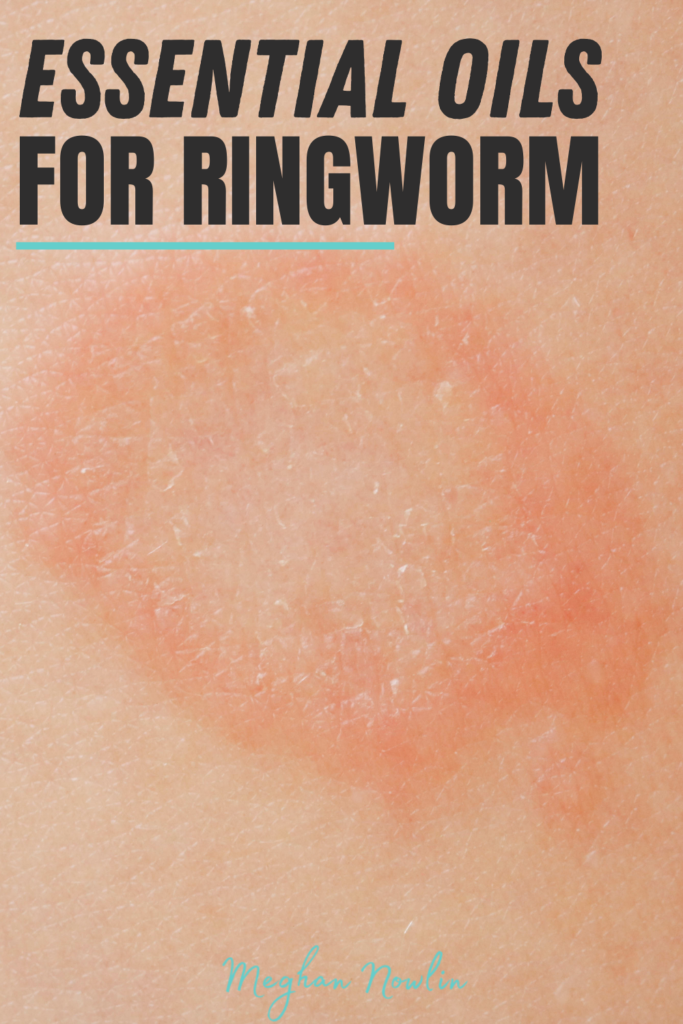
Essential Oils for Ringworm
I have personally had to deal with ringworm twice as a mom!
The first was with my oldest son when he was a toddler. He got ringworm from playing outside.
The second time was with my youngest son. He was helping me with some yard work and ended up with multiple ringworm spots on his stomach and back. Multiple as in about six or seven spots!
I will confess I felt a little panicky when I first saw it pop up! But I shouldn’t have. I pulled out the essential oils and it cleared up really fast!
Within a week the spots were pretty much gone!
Essential Oil Medicine Cabinet
Ringworm is just one example of why you need to have an essential oil medicine cabinet!
It’s important to always be prepared when it comes to ailments and illnesses.
This is just one of the reasons why I created the Essential Oil Medicine Cabinet Binder!
If you don’t already have a copy of the binder definitely go get it now!
What is Ringworm?
Ringworm, despite its name, is not caused by a worm but rather by a group of fungi known as dermatophytes. It is a contagious fungal infection that can affect the skin, scalp, nails, and sometimes even the groin and feet. The medical term for ringworm is “tinea.”
Here are some key points about ringworm:
1. Fungal Infection: Ringworm is caused by various species of fungi from the genera Trichophyton, Microsporum, and Epidermophyton. These fungi thrive in warm and moist environments.
2. Common Types: There are several common types of ringworm, each affecting a different part of the body. Some examples include:
Tinea corporis: Ringworm on the body.
Tinea capitis: Ringworm on the scalp and hair.
Tinea pedis: Athlete’s foot, a fungal infection of the feet.
Tinea cruris: Jock itch, which affects the groin area.
Tinea unguium: Ringworm of the nails, often causing nail changes and discoloration.
3. Symptoms: Symptoms of ringworm can vary depending on the location of the infection but often include:
Red, itchy, and scaly patches on the skin.
Circular or ring-shaped rash (hence the name “ringworm”).
Hair loss and bald patches in the case of scalp ringworm.
Thickening, discoloration, and brittleness of the nails in the case of nail ringworm.
4. Transmission: Ringworm is highly contagious and can be spread through direct contact with an infected person or animal, as well as through contaminated objects or surfaces. Pets, particularly cats and dogs, can carry the fungi and transmit them to humans.
5. Traditional Treatment: Ringworm is typically treated with antifungal medications, which can be applied topically (creams, ointments) or taken orally (pills). Treatment duration varies depending on the location and severity of the infection.
6. Prevention: To prevent ringworm, practice good hygiene, avoid sharing personal items like towels and clothing, and keep the skin clean and dry. If you have pets, make sure they receive regular veterinary care to prevent the spread of the fungus.
It’s very important to start treatment for ringworm quickly if you suspect you have ringworm, as the condition can worsen if left untreated. If home remedies and over-the-counter treatments do not seem to be helping, then prescription medications might be necessary for complete eradication of the fungal infection.
Where Do You Get Ringworm?
As mentioned above, ringworm is a contagious fungal infection that can be acquired through direct or indirect contact with the dermatophyte fungi responsible for the condition.
Here are common ways you can get ringworm:
1. Direct Contact with an Infected Person: If you touch the skin or other infected areas of an individual with ringworm, you can contract the infection. This can occur through activities such as hugging, skin-to-skin contact, or sharing personal items like towels, clothing, or sports equipment.
2. Contact with Infected Animals: Pets, particularly cats and dogs, can carry the fungi that cause ringworm. Petting, grooming, or simply being in close contact with an infected animal can lead to transmission. Handling infected soil (from a pet’s bedding or play area) can also pose a risk.
3. Contact with Contaminated Objects: Fungal spores responsible for ringworm can survive on surfaces, clothing, and personal items. If you touch objects like combs, brushes, hats, or gym equipment contaminated with the fungus, you can become infected.
4. Walking Barefoot in Contaminated Areas: Walking barefoot in damp, warm environments like locker rooms, public showers, and swimming pool areas can expose your feet to the fungus responsible for athlete’s foot (tinea pedis), a type of ringworm.
5. Soil and Environment: Some species of dermatophyte fungi can persist in soil. Contact with contaminated soil, especially in gardening or farming, can lead to fungal infections.
6. Close Personal Contact: Sharing items such as towels, bedding, or clothing with an infected person can lead to the spread of ringworm.
7. Indirect Transmission: Ringworm can also be indirectly transmitted through infected objects such as hats, hairbrushes, and towels. When you use these items, you may inadvertently transfer the fungal spores to your skin.
8. Weak Immune System: People with weakened immune systems, such as those with HIV/AIDS or individuals undergoing chemotherapy, are more susceptible to ringworm and may contract it more easily.
Identifying Ringworm
Identifying ringworm often involves looking for specific signs and symptoms associated with this fungal infection. Here are some key characteristics to help you identify ringworm:
1. Circular or Ring-Shaped Rash: One of the hallmark signs of ringworm is a round or oval-shaped rash with a well-defined, raised, and red border. The center of the rash may appear clear or scaly, giving it the appearance of a ring. This is where the term “ringworm” comes from. However, it’s important to note that the rash may not always be perfectly round.
2. Itching: Ringworm is often accompanied by itching, which can range from mild to severe. The itching may be especially intense at the edges of the rash.
3. Scaling and Redness: The skin inside the ring may become scaly, dry, and red. It can be slightly raised or bumpy.
4. Clearing in the Center: As the rash progresses, the center of the ring may clear up, creating a more pronounced ring shape.
5. Blistering: In some cases, particularly with a type of ringworm called tinea pedis (athlete’s foot), the rash may cause small fluid-filled blisters.
6. Hair Loss: If ringworm affects the scalp (tinea capitis), hair in the affected area may become brittle and break off, leading to bald patches.
7. Nail Changes: Nail ringworm (tinea unguium) can cause thickening, discoloration, and brittleness of the nails. They may become yellow, white, or brown.
8. Spread: Ringworm can spread gradually, with multiple rings appearing on the skin over time. It can also be transmitted to other people or parts of the body if proper precautions are not taken.
9. Location: The location of the ringworm infection can vary. Common sites include the body, scalp, groin area (jock itch), feet (athlete’s foot), and nails.
It’s important to note that these symptoms can vary in appearance and severity depending on the individual and the type of fungus causing the infection. It’s important to be aware that other skin conditions can mimic the appearance of ringworm, so accurate diagnosis is necessary for appropriate treatment. If needed consult a healthcare provider for proper care and guidance.
Best Essential Oils for Ringworm
Certain essential oils contain antifungal properties and have been shown to be helpful with ringworm. Here are a few antifungal essential oils that are recommended:
1. Tea Tree Oil: Tea tree oil (Melaleuca alternifolia) is known for its antifungal and antibacterial properties. It may help alleviate the symptoms of ringworm. I personally apply this oil neat, but if sensitivity occurs, or with very young children, it can be diluted with a carrier oil and applied topically to the affected area. It’s incredibly important to use a good quality tea tree. If the oil is not pure it can be harmful to the skin and cause irritation.
2. Lavender Oil: Lavender oil (Lavandula angustifolia) has some mild antifungal properties and can be soothing for the skin. It’s not the strongest or the oil that I would use first, but if this is the only oil on the list you can start applying it while you source some stronger antifungal oils.
3. Oregano Oil: Oregano oil (Origanum vulgare) contains compounds such as carvacrol, which have antifungal properties. It’s a potent essential oil and should be heavily diluted before use. You can use whichever carrier oil you prefer such as grapeseed oil, coconut oil, etc. Oregano oil extremely effective, but due to it’s sensitive nature I do not personally use this with children.
4. Myrrh Oil: Myrrh essential oil is known for its anti-fungal properties, antibacterial properties, and anti-inflammatory properties, which makes it a great candidate for managing ringworm. I personally love myrrh for this! Below you will find what I personally do for ringworm with my family.
5. Clove Oil: Clove essential oil contains eugenol, a compound with antifungal properties. Diluted clove oil can be applied to the affected area. Due to its potency, use it sparingly and avoid prolonged contact with the skin. And like oregano essential oil this is not an oil that I like to use with children. Definitely dilute well before use.
6. Thyme Oil: Thyme essential oil contains thymol, which has antifungal and antibacterial properties. It is another oil that is sensitive to the skin so be sure to dilute it well with a carrier oil before applying it to the affected area.
7. Lemongrass Oil: Lemongrass essential oil has antifungal and anti-inflammatory properties. It is actually an oil that I also love for warts. It does however need to be diluted before applying it to the ringworm-affected skin. Lemongrass is an oil that at first will not bother the skin, but after continued use it will become sensitive. This is the only reason why I do not prefer to use it for ringworm as ringworm requires frequent applications.
8. Eucalyptus Oil: Eucalyptus essential oil may have some antifungal properties and can be diluted and applied to the affected area. Like lavender essential oil it is not the oil of choice however.
What I personally Use for My Family
What I have found is that layering tea tree and myrrh gives the best results.
Those two oils are my go to oils when it comes to ringworm treatment. They have a great antifungal effect, are not sensitive to the skin, and work very quickly!
How I Apply Essential Oils for Ringworm
I personally add tea tree neat to each spot (neat means undiluted), give it a minute or two to dry, and then apply myrrh neat to each spot as well. I do this several times per day.
I do not like to use oregano oil personally, especially for children. It is such a warm oil and even greatly diluted you have to use with caution.
The tea tree and the myrrh always do the trick for me!
I have also applied apple cider vinegar to the skin, as mentioned below, but it can sometimes cause some irritation to sensitive skin. It’s definitely worth a try though and can be done in addition to using the oils. Just make sure the oils have completely dried before adding apple cider vinegar and vice versa.
And, of course, if any irritation occurs I stop using the oils immediately or give the skin a longer break between applications.
Additional Home Remedies for Ringworm
While it’s important to consult with a healthcare professional if you are concerned or if you need help to properly diagnosis ringworm, there are some additional home remedies that may help alleviate symptoms and support the healing process.
These remedies are best used as complementary treatments alongside other treatments. I personally rely on the essential oils on this list more than the following items.
But as I said above, I do personally use apple cider vinegar sometimes as well. Just be sure to allow the essential oils to dry before adding the following items.
Also if you are using an essential oil that requires dilution, or if you decide to dilute, you can use one of the carrier oils listed below to give added antifungal benefits to the essential oils.
I also want to mention that not all of the items on this home remedy list are natural. However they are common home remedy treatments and are worth mentioning so that you have many options to choose from.
Here are the additional home remedies for ringworm:
1. Keep the Affected Area Clean and Dry: Proper hygiene is essential in managing ringworm. Wash the affected area with mild soap and water daily, and ensure it is thoroughly dry afterward. Fungus thrives in moist wet environments. Avoid sharing towels or personal items with others to prevent the spread of the infection.
2. Apply Over-the-Counter Antifungal Creams: This is not a natural option, but it does require mentioning as it is an option and one used by many. I personally have never used any over the counter antifungal for ringworm but if you do not feel like the ringworm is responding to what you are doing then it is an option to consider. Over-the-counter antifungal creams or ointments, like clotrimazole or terbinafine, can be applied to the affected area as directed on the packaging. Follow the instructions carefully and continue using the cream for the recommended duration, even if the symptoms improve.
3. Use Medicated Shampoos: As with the over the counter creams, this is not something I have ever used. However if the ringworm is not responding to your treatments then it is an option, although not a natural one. If ringworm affects your scalp (tinea capitis), you can use medicated antifungal shampoos containing ingredients like ketoconazole or selenium sulfide. Leave the shampoo on for a few minutes before rinsing.
4. Apple Cider Vinegar: As I mentioned above, apple cider vinegar has some natural antifungal properties. You can dilute it with water (1 part vinegar to 1 part water), especially if you’re worried about it being sensitive to the skin, and apply it to the affected area with a cotton ball. Let it dry before rinsing off. Be cautious if your skin is sensitive, as it may cause irritation. If you are going to apply this after applying essential oils then be sure that the oils have dried first.
6. Garlic: Garlic contains natural antifungal compounds. Crush a garlic clove and mix it with a carrier oil to create a paste. Apply this paste to the affected area and leave it on for a short time before washing it off. I have personally never tried this method. As I mentioned above I usually just stick with the oils and maybe some apple cider vinegar. However this is said to be a good option so it might be something you want to try.
7. Turmeric: Turmeric is an amazing herb! Turmeric has both antifungal and anti-inflammatory properties. It has been said that you can make a paste by mixing turmeric powder with water and apply it to the ringworm-affected skin. Leave it on for about 30 minutes before rinsing off.
8. Coconut Oil: Coconut oil is seriously one of those things that it seems can do it all! While not an essential oil, coconut oil has demonstrated antifungal properties. It can be applied to the affected area after being warmed and liquefied. If you are using an essential oil that requires dilution this would be a great carrier to use!
9. Aloe Vera: Aloe vera gel is soothing and can help reduce itching and inflammation. Apply fresh aloe vera gel directly to the affected area to ease symptoms. This is not something I would only use however. I would definitely use the antifungal items in this article for the actual ringworm and reserve the aloe vera gel for comfort.
5. Neem Oil: Neem oil is known for its potent antifungal and antibacterial properties. It can be applied to the affected skin as well.
10. Maintain Good Hygiene: Wash your hands thoroughly after touching the affected area to prevent spreading the infection to other parts of your body or to other people.
11. Wash Bedding and Clothing: Ringworm can be contagious, so wash your bedding, clothing, and towels regularly in hot water to prevent reinfection.
If after using home remedies the infection still persists, worsens, or spreads, or if you have any concerns, consult a healthcare professional for appropriate treatment and guidance.
Additional Essential Oil Cautions
Before using any essential oil or natural remedy on your skin, it’s crucial to perform a patch test to check for allergies or sensitivities.
Also if sensitivity occurs discontinue use of the essential oil and consult your health care professional.
While using essential oils, monitor the progress of your ringworm infection. If you do not see improvement or if the infection worsens, consult a healthcare provider for appropriate medical treatment.
Recent Comments